Do you wonder how are jeans made? Does it only need stitching? Definitely No. Jeans manufacturing requires at least five major processes, pattern making, cutting, sewing,washing and finishing. Each process involved various small procedures, and every step is important. When you buy a pair of jean and wear it, you have no idea about what they has been through. Let me tell you the story.
What is jeans manufacturing?
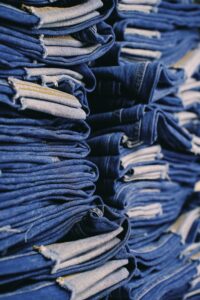
Denim manufacturing is the process of making raw materials to a finished products. Start from the denim fabric selecting then preparing the raw materials, master will make the pattern base on the design, workers cut the fabric into shape and stitch the cutting pieces through sewing, After that, the jeans will be sent to the washing mill, undergoing washing to have beautiful color and fashionable style. Finally adding button or other decoration, a wearable directly product is finished.
– Material Preparation
Find and select the appropriate denim fabric is a must. Different denim will result different color even in same washing process. In order to achieve the color wanted, you have choose the right one according experience. Then prepare other trims needed like thread, zipper, label, pocketing etc.
– Patterning and Cutting
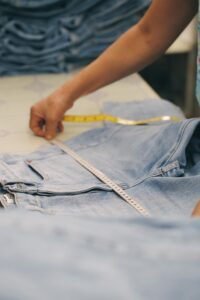
Making patter is also important in manufacture jeans because it affect the jean fit and directly influences the wearing experience. For a good custom denim manufacturer, must have own experienced pattern master who will help a lot in fitting especially for custom jean. Moreover, an efficient pattern layout can less the waste of the fabric. That’s all the manufacturer wanted. After patterning done, worker will cut the rolling fabric to pieces for sewing.
– Sewing
Workers use sewing machines to stitch all the cut pieces together with reinforced thread. Different part of stitching will require different sewing machines, to make the production more efficiency. An experienced sewer’ craftsmanship can make a quality jean.
– Washing
After finish sewing, the jeans undergo washing treatments. Washing can soften the fabric and create different fashion style, to make the jeans have unique characterize. Through a series of washing techniques such as enzyme wash, stone washing, laser denim washing, ozone or other chemical treatment, to let the jeans have own natural faded blue.
– Finishing and Packing
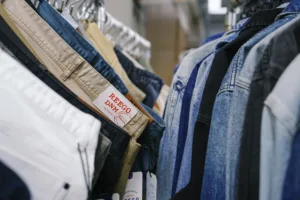
Before on the shelves, every pairs of jeans undergoes final quality inspection, inspector check the key measurement the specification, stitching, joining seam etc, but also the evenness of washing color and any stains and defects, to sure it is sable product on market.
Key Differences: Chino Vs Jeans
Feature
Jeans
Chinos
Fabric
Denim
Twill
Feature
Casual, Stylish
Formal, relaxed wear
Durability
High durable
Medium Durable
Color Range
Indigo
Variety
Tips: A pair of well-fitted jeans handles most casual scenarios, while a tailored pair of chinos is a reliable choice for business-casual settings. Choose based on the specific occasion and desired impression.
Pros & Cons Comparison
Jeans
Chinos
Pros
Classic
Wide color Range
High durability
Comfort wearing feel
Easy Maintenance
Easy Care
Culture Icon
Formal
Cons
Hard and heavy
Wrinkles Easily
Color Bleeding
Less Iconic
Environment Impact
Less Durable
Conclusion
Jeans are a complex product resulting from detailed manufacturing processes that transform raw denim into stylish, durable clothing. Choose jeans for a classic, rugged look and maximum durability.
In Reego practice, it is not only sewing. We need to select the most suitable fabric and test the shrinkage, try the washing color to ensure the sample meet the requirement. We also do final inspection of sample details before sending, to sure the sample you get is perfect.
2.What is the Minimum Order Quantity (MOQ)?
Moreover,we always strive to lower the waste through the whole production process , as part of our commitment to sustainable production. To support the new brand, we offer flexible trial order solution to meet their small batch needs.
3.What is the most important in denim production at the beginning?
In Reego practice, communication is essential. Before staring, our design and pattern master will review all the technical details and discuss any difficult point, that will help minus the potential errors and ensure the fit, color, styling is wanted and this jean is manufacturable.
As all know, China as word know factory, produces over half of the worlds denim jeans.And the high efficiency production , good quality and cost-effective...
To provide the best experiences, we use technologies like cookies to store and/or access device information. Consenting to these technologies will allow us to process data such as browsing behavior or unique IDs on this site. Not consenting or withdrawing consent, may adversely affect certain features and functions.
Functional
Always active
The technical storage or access is strictly necessary for the legitimate purpose of enabling the use of a specific service explicitly requested by the subscriber or user, or for the sole purpose of carrying out the transmission of a communication over an electronic communications network.
Preferences
The technical storage or access is necessary for the legitimate purpose of storing preferences that are not requested by the subscriber or user.
Statistics
The technical storage or access that is used exclusively for statistical purposes.The technical storage or access that is used exclusively for anonymous statistical purposes. Without a subpoena, voluntary compliance on the part of your Internet Service Provider, or additional records from a third party, information stored or retrieved for this purpose alone cannot usually be used to identify you.
Marketing
The technical storage or access is required to create user profiles to send advertising, or to track the user on a website or across several websites for similar marketing purposes.
 by Yolanda



 07Feb
07Feb
 09Feb
09Feb
Comments are closed