I believe most of denim buyer or production manager have meet above mentioned production issue, almost every one will see it. How can less the issue?
A piece of jean looks simple, but it is much complex from fabric to a finished products. Many buyer doesn’t know the production process but have to face that why my bulk order feels completely off? Sample looks good, but bulk has various kinds of color shade. And the spec is off and leading customer return, Why? Lets breakdown the above most common issue in denim
1.Color are much different from sample, why?
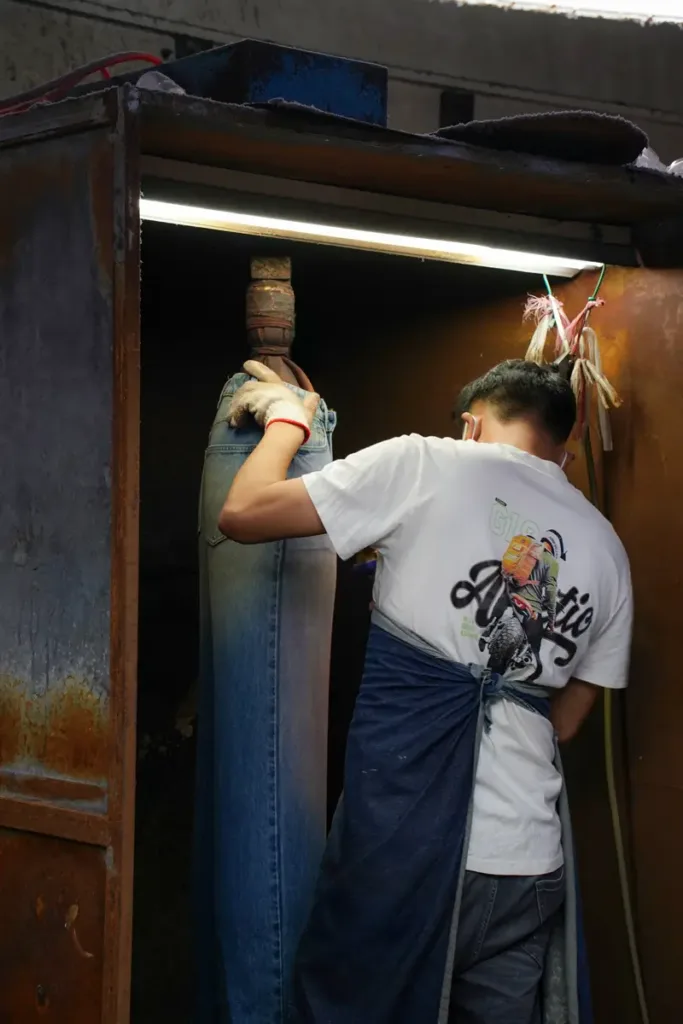
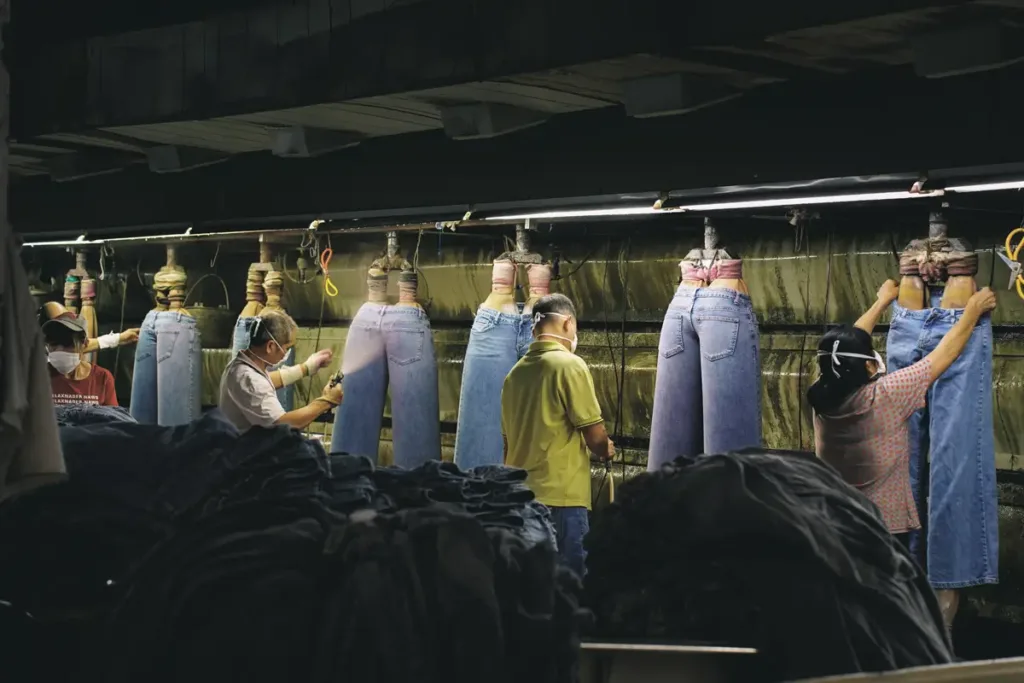
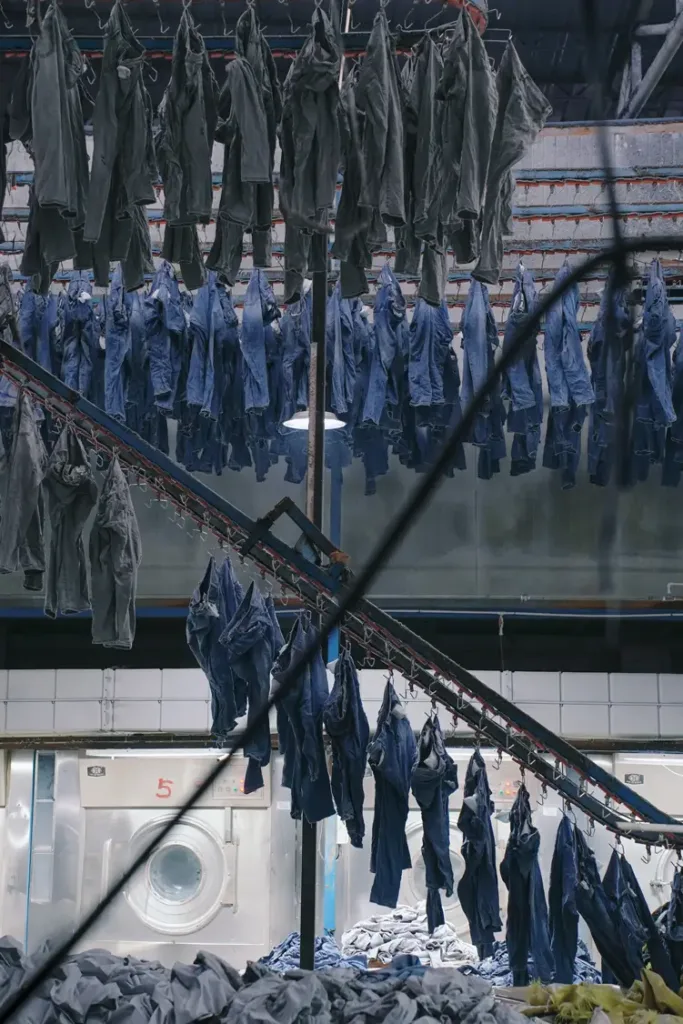
Normally when making sample, it usually wash separately in small washing machine by a master craftsman while units are less than 10pcs. But in bulk run, it is in a standard machine which usually over 100pcs for one lot. This requires a high level of skill from workers to control the chemical and the use of the pigment, but also the sensitive to the temperature.
In addition, the manual whisker, PP spray, broken holes for bulk are done by ordinary workers, the control of the tools and chemical liquid from each person is different, which results in variations between each piece.
The lack of quantifiable wash standards, poor the washing control experience from workers, and the factory’s overconfidence etc will enlarge the issue.
What need to do?
-One piece bulk sample sign-off to sure the different within the acceptable range
-Checking the first lot color if possible and requiring the shade lot
-Working with washing mill with rich experience and quality control system-
-Selected the right supplier who have standard control of the quality
2.Sample fit is good, but bulk spec is off, why?
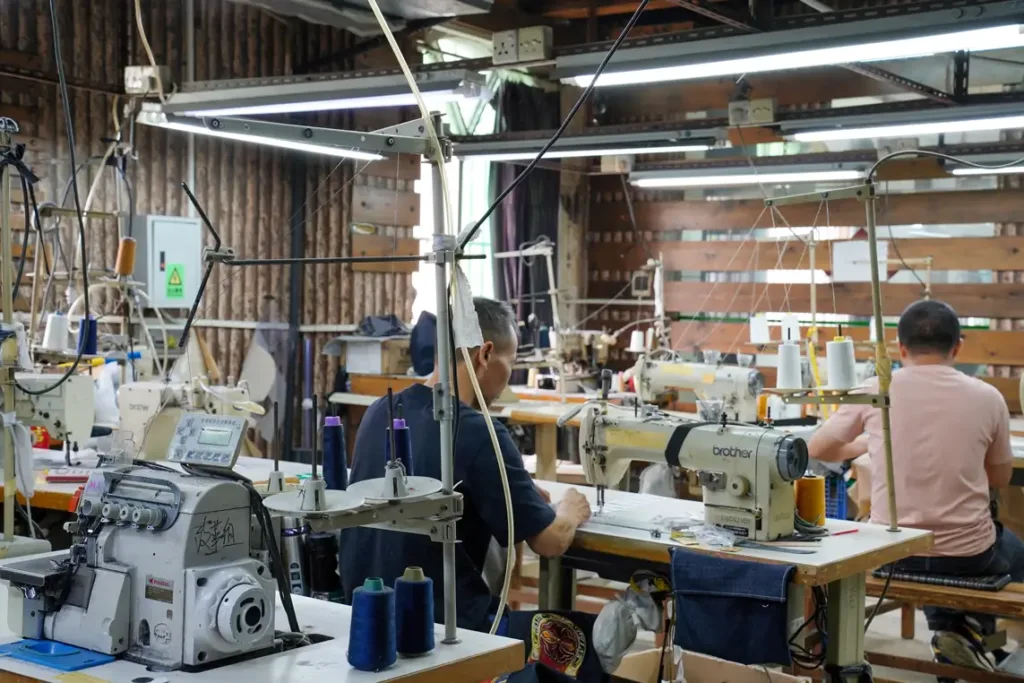
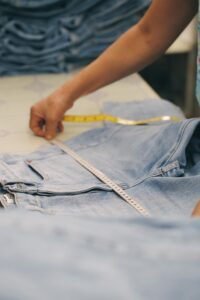
The approved sample fit perfectly, but after first washing, it become ripe up or tighten. Even in same pattern but measurement is different. It is most troublesome problem for all denim manufacturers. In fact, sample is sewed in sample room by single person, but in bulk productions, it involves different workers sewing different part, it is one of results inconsistent. In addition, nowadays modern denim fabric contain spandex for comfort wearable feel. However, the spandex will shrink after washing. To know the fabric shrinkage is most important in the denim production. So doing the shrinkage test of bulk fabric is a must in the beginning. Not only one roll of the fabric, need test more to get the average since the cutting pattern is one set.
What need to do?
-Choose the quality fabric not only the color, but also with the stable shrinkage
-Test the average shrinkage of bulk fabric before cutting
-Checking the spec before washing
-One piece bulk sample to do home washing test if have time
3 Why bulk lead time taking so long?
A promised 45days lead time delay to 60days , that miss the sale season. And the rushing production leads to quality issue, like thread ends, smelly or risk of mold. You must understand the denim whole process and sure the approved sample is ready when starting counting the lead time. Most factory lead time 30~45days is base on sample approved and fabric is stock. When approving sample process is delay, that will effected the delivery. Moreover, denim need washing, the hand-sanding, scraping etc need manual. The sales seasons are close, so brands shipping periods will be with a specific time, so that will be a line which need to considering.
What need to do?
-Full timeline planning, make sure to have some more extra buffer time for the washing
-Understanding the the factory’s schedule, make sure sample approved on time
-Sure bulk fabric arrives on time
-Plan the shipment in advance according to the sales season
Denim is not a simple products you need to know it more and understand its characteristic, so that can avoid the problem as much as possible. The problem mentioned above is frequently happen and cause the looses easily. There are many other issue may also arise. What is the biggest denim production issue or mistake you have met? Leave your message,let’s talk about and figure it out.
Reego Denim se especializa en jeans desde hace más de 20 años. La empresa comenzó como un pequeño taller y actualmente colabora estrechamente con numerosas marcas de moda mediante diseño creativo y producción de calidad, con una capacidad anual de 2 millones de prendas. Reego cuenta con tres fábricas subsidiarias con certificaciones BSCI/QIMA, que producen jeans, pantalones casuales y chaquetas de denim, y recientemente ampliaron su oferta a la indumentaria deportiva.
Además, Reego cuenta con un sólido equipo de diseño que presenta nuevas series cada temporada para seguir las tendencias. Su departamento de I+D colabora con proveedores como Advance Denim, AI Denim y Hotline Textile para desarrollar tejidos denim competitivos en costos.
Preguntas frecuentes
1. ¿Cuánto tiempo se necesita para hacer una muestra?
En Reego, el desarrollo de una muestra no consiste únicamente en coser. Seleccionamos el tejido más adecuado, evaluamos su encogimiento y probamos el color del lavado para asegurarnos de que la muestra cumpla los requisitos. También realizamos una inspección final de todos los detalles antes del envío para que reciba una muestra correctamente terminada.
2. ¿Cuál es la cantidad mínima de pedido (MOQ)?
Además, procuramos reducir los desperdicios a lo largo de todo el proceso como parte de nuestro compromiso con una producción sostenible. Para apoyar a las marcas nuevas, ofrecemos soluciones flexibles de pedidos de prueba que se adaptan a sus necesidades de lotes pequeños.
3. ¿Qué es lo más importante al comenzar una producción de denim?
En Reego, la comunicación es esencial. Antes de comenzar, nuestro equipo de diseño y patronaje revisa todos los detalles técnicos y analiza los puntos difíciles. Esto ayuda a reducir posibles errores y garantiza que el calce, el color y el estilo coincidan con lo solicitado y que el jean pueda fabricarse de manera viable.
¿Cómo se fabrican los jeans? ¿Se ha preguntado cómo se hacen? ¿Solo hay que coser? Definitivamente no. La fabricación de jeans requiere al menos cinco procesos principales,...
China, conocida como la fábrica del mundo, produce más de la mitad de los jeans del mercado global. Su producción eficiente, buena calidad y relación costo-beneficio...
Para ofrecer las mejores experiencias, utilizamos tecnologías como las cookies para almacenar y/o acceder a información del dispositivo. El consentimiento para estas tecnologías nos permitirá procesar datos como el comportamiento de navegación o identificadores únicos en este sitio. No consentir o retirar el consentimiento puede afectar negativamente determinadas características y funciones.
Funcional
Siempre activo
El almacenamiento o acceso técnico es estrictamente necesario para el propósito legítimo de permitir el uso de un servicio específico solicitado expresamente por el suscriptor o usuario, o con el único propósito de efectuar la transmisión de una comunicación a través de una red de comunicaciones electrónicas.
Preferencias
El almacenamiento o acceso técnico es necesario para el propósito legítimo de almacenar preferencias no solicitadas por el suscriptor o usuario.
Estadísticas
El almacenamiento o acceso técnico se utiliza exclusivamente con fines estadísticos.El almacenamiento o acceso técnico se utiliza exclusivamente con fines estadísticos anónimos. Sin una citación judicial, el cumplimiento voluntario por parte de tu proveedor de servicios de Internet o registros adicionales de un tercero, la información almacenada o recuperada únicamente con este propósito normalmente no puede utilizarse para identificarte.
Marketing
El almacenamiento o acceso técnico es necesario para crear perfiles de usuario con el fin de enviar publicidad, o para realizar el seguimiento del usuario en un sitio web o en varios sitios web con fines de marketing similares.



 por Yolanda
Comments are closed